
As I was driving down to Central Otago from Wellington, I wasn’t entirely sure of the answer to this question, but I knew I was about to find out. Last week, I had the privilege to be at the Great Naseby Water Race. GNWR is a lapped ultramarathon that has taken place for nearly 20 years in the depths of the Central Otago winter, with individual distances ranging from 50km to 200 miles (320km). I was there to crew one of my athletes, Naomi. This post isn’t to tell the story of her race, which she has done brilliantly elsewhere, but to share some stories and lessons from my crewing experience.
It would be amazing to be able to crew and/or pace all of my athletes at all of their races. There is a trade-off here, and I have to assess the time and expense of travelling, how much support I can offer the athlete based on the nature of the course and race rules, and how much benefit the athlete will get from having me at the race. While travelling to Naseby was not a straightforward ask from Wellington, I knew there was a lot I could do to help in a long lapped ultra and GNWR’s permissive rules - in contrast to Backyard Ultras and some point-to-point races that strictly limit pacing - meant I could share plenty of laps with Naomi.
When Naomi and I had her first coaching call about three months ago, she had already set her sights on running 200 miles at Naseby. Naomi’s previous pedigree - with multiple 200km finishes inside 30 hours - showed that she was capable of it, and there wasn’t time for many radical changes. Our focus was on small tweaks to training, lots of mindset work and some marginal improvements in race strategy.
I arrived at Race HQ in the campervan about 30 minutes before the start on Wednesday morning. We had already had several calls to talk through Naomi’s objectives, strategy and tactics, and what my role was as crew chief. This included talking through some scenarios when I should be “good cop” and offer sympathy or a change in plan versus times when I needed to be “bad cop” and tell her to stick to the plan and get on with it. This would be crucial as the race entered its third day and uncharted territory for Naomi.
Something I have learned while coaching is that every athlete is different. There is no universal “ultra mindset”, and the approach that motivates one runner can completely turn another off. The more I understand an athlete before race day, the better equipped I am to support them when they're fatigued and making decisions under pressure.
The first 30 hours or so were pretty straightforward for me as crew chief. This was a timeframe that Naomi had done multiple times before and she had a good handle on how to manage herself through it, including her gear choices and fuelling and hydration strategies. The biggest challenge on the first day was the weather conditions, with persistent rain and snow making an appearance. My role was largely limited to staying warm in the van, occasionally filling some soft flasks and offering some encouragement when Naomi came through every couple of hours.
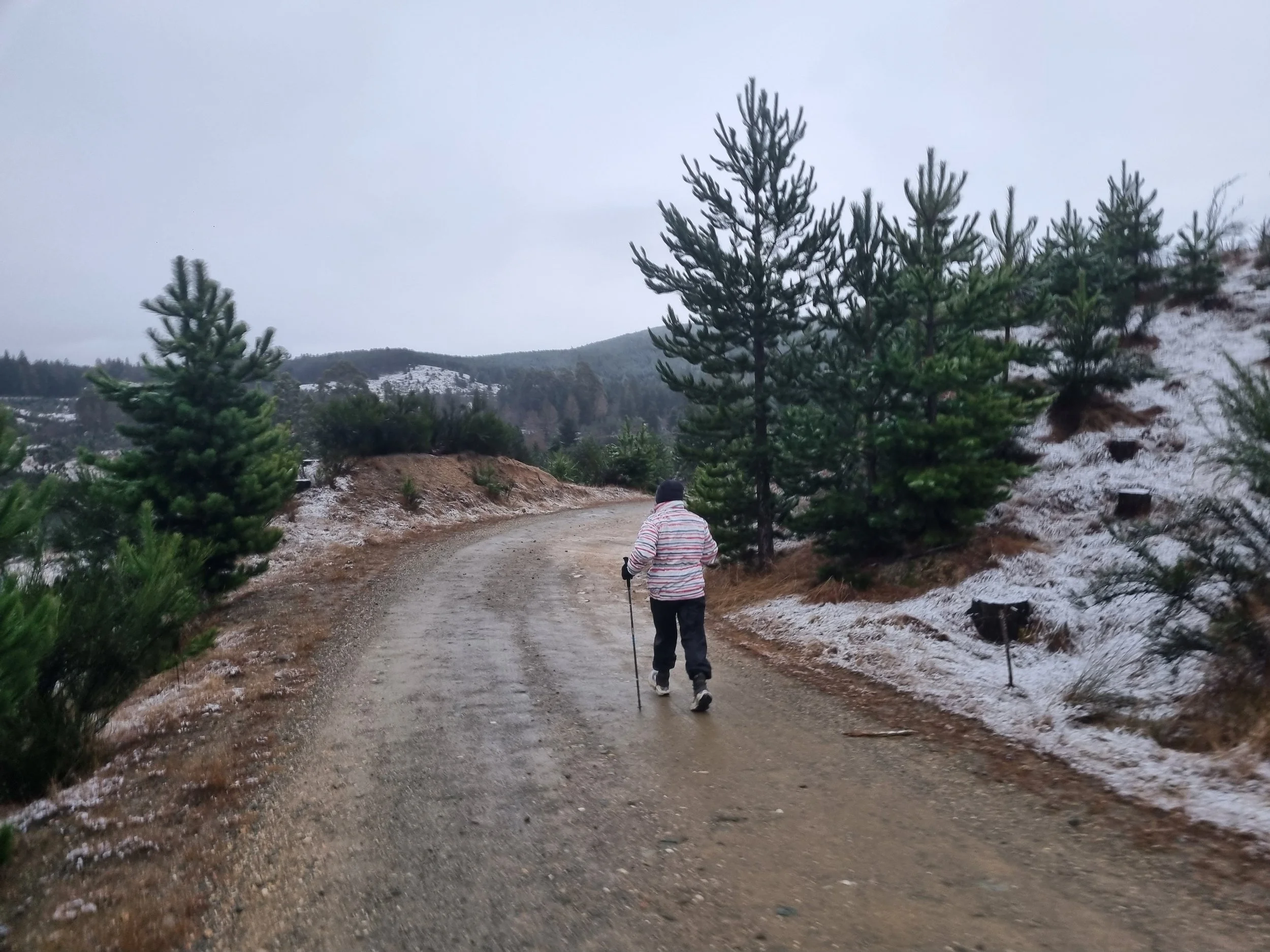
All sorts of weather on the first day
At the start of the second night on Thursday, Naomi was heading into new territory and everything from here was going to be a test of her endurance, fuelling and mental resilience. I started jumping in and running more laps with her at this point, and was pleased to find that the conditions were getting easier underfoot, though the Wednesday mud had definitely already sapped all of the runners.
Sleeping during a run was a new challenge for Naomi, but we had talked through her strategy in advance and we knew that the amazing volunteers would have the marquee well set up for her. She stopped for two naps during Thursday night. The first was early in the night and lasted 15 minutes. Naomi got going pretty well after that. The second nap was around 5am, so still before sunrise. I was expecting Naomi to be going into that asking for more than 15 minutes and was surprised to find that she was very insistent that she wanted to be woken up after 10 minutes. I could have let her sleep for much longer, as she went straight out like a light, but I respected the clear instruction I was given, and had her up and going pretty swiftly after that. Taking only 25 minutes of sleep across three days was definitely ambitious, and Naomi showed incredible resilience to keep going from so little rest. Preparation doesn't mean knowing exactly what will happen - sometimes it means having conversations before the race that make difficult decisions easier when you're exhausted.
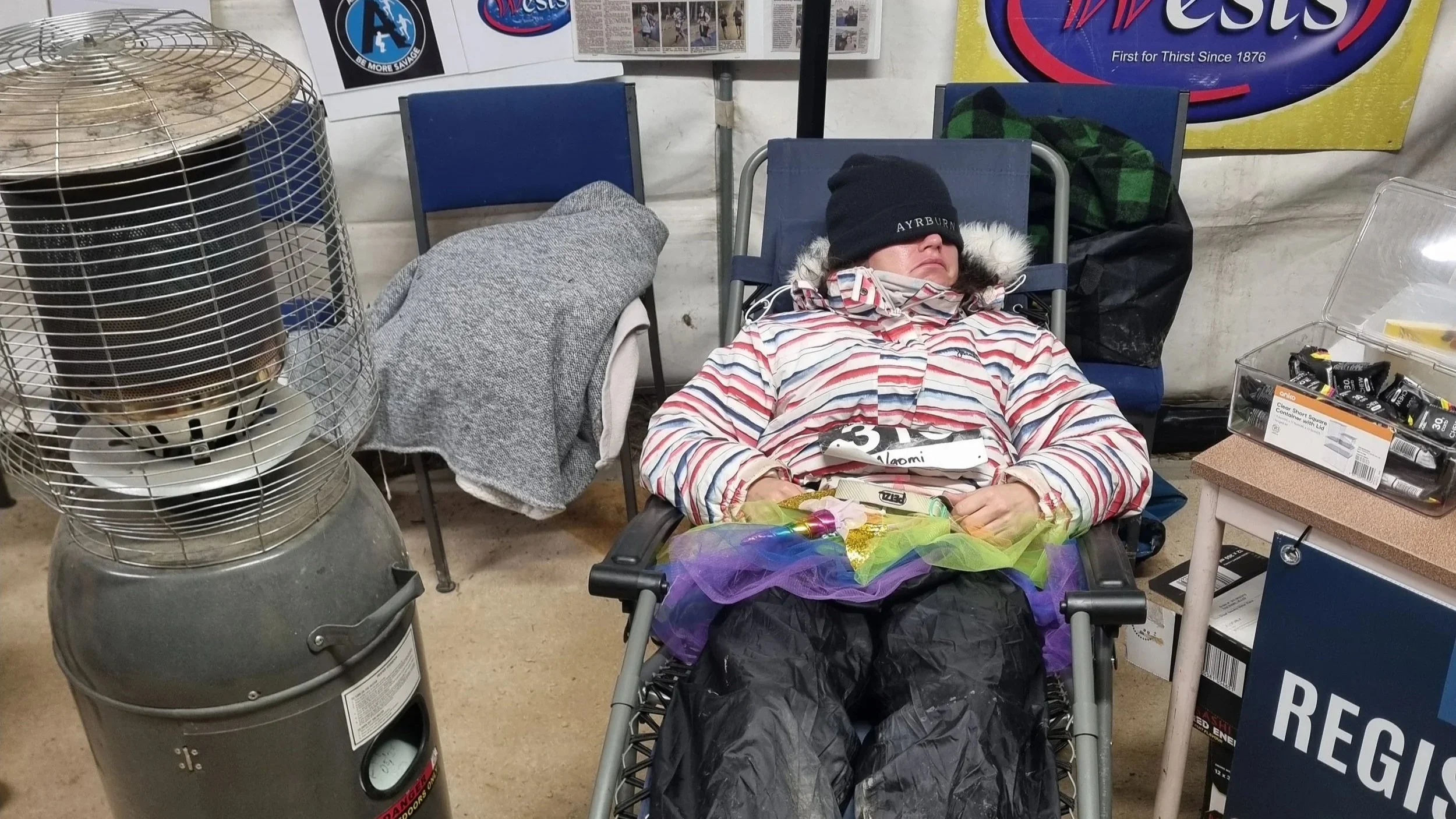
Nap time on the second night
I jumped out of pacing around midnight and got about four hours of sleep on that second night. I could have kept pacing Naomi, but I knew that making sure I looked after myself by sleeping and getting some proper food on board would mean I could be more useful on the third day, Friday.
I jumped back into pacing around 10am on Friday and covered about 40km with Naomi on that last day. It would be fair to say that she went through some pretty extreme highs and lows on that day, emotionally and physically. I saw my role as trying to help her to make peace with the idea that those lows were going to happen, to keep her moving forwards through them, and to bring her back into a positive mindset as swiftly as was realistic. At several points, Naomi did say that she didn’t think she was capable of finishing, but I was able to draw on strategies we had talked about in our pre-race calls to reconnect her to her purpose for being at Naseby.
I deployed quite a few different motivational tactics during that last day, including: relentless positivity (“you are doing amazing!”), appeals to logic (“you are going to finish if you keep moving forwards, eating and drinking”), and direct instructions (“eat this, follow my feet”). It was interesting to observe which of these Naomi responded well to and to hear some of what was going through her mind in those moments. As a coach, you often rely on the post-race debrief when memories start to become sanitised, so getting to observe this in real time taught me a lot about Naomi in a short period of time. Often, the best approach was just to offer silence and the tap-tap of another pair of feet moving in the same rhythm as hers. At other times, I had to activate “bad cop” mode and tell Naomi very directly that she had to eat and drink something, even if I did then playfully feed her jetplanes as if she was a toddler.
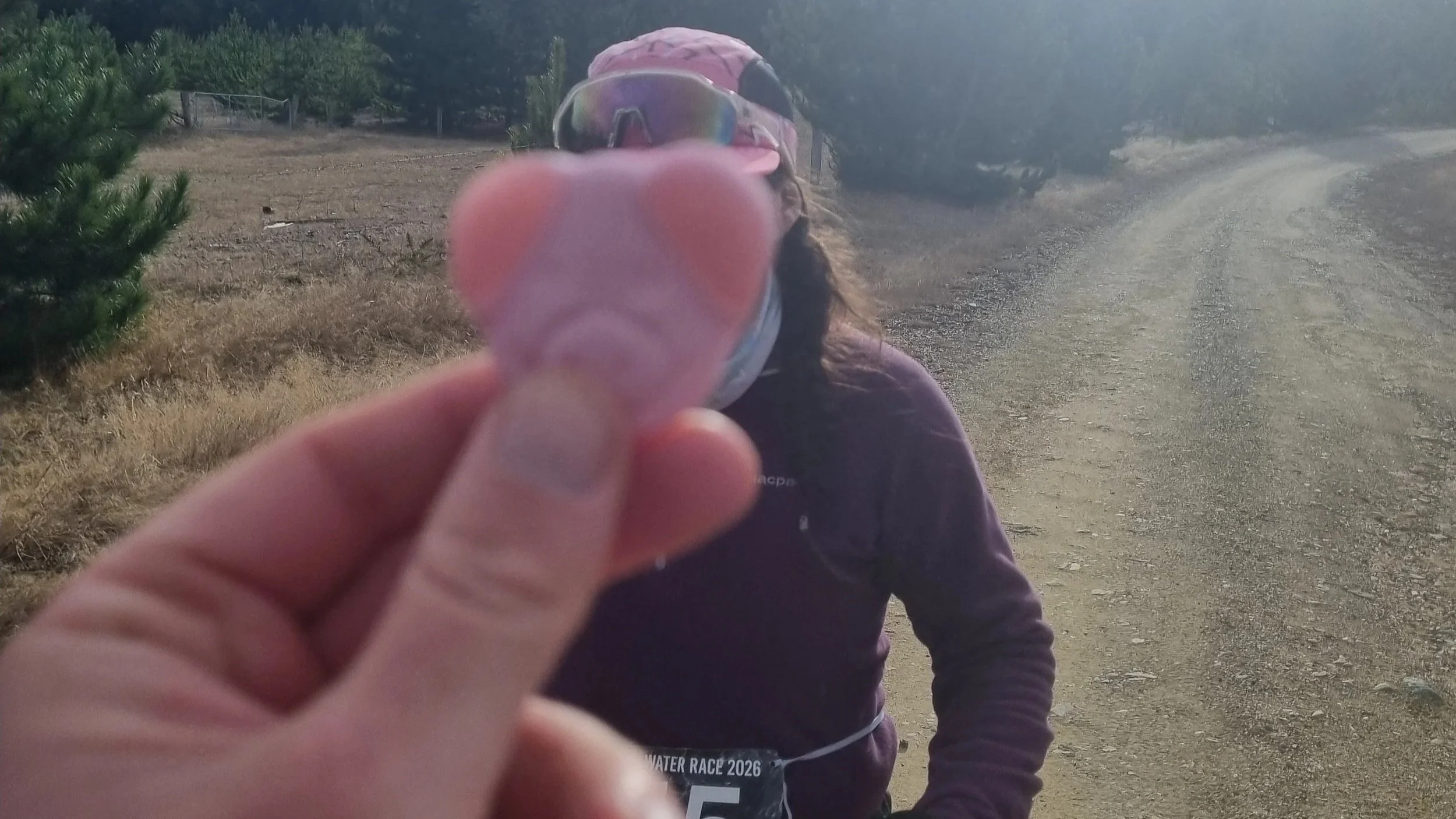
When you can only be miserable or silly: choose silliness.
It was a joy to see Naomi cross the finish line. Knowing how much she had invested in getting to the start line, let alone what she had persevered through during the course of the race, made for an emotional experience all round. That Naomi was the first female finisher was a happy bonus, but she had already achieved all of her goals before that was confirmed.
It was a real privilege to be present at Naseby and to get a front-row seat to Naomi’s performance and the achievements of all the runners there. You get to learn a lot about someone when they have been running in circles for over 48 hours and I certainly learned a lot about Naomi as a human and an athlete, and also about how to crew and pace these longer events more effectively. I definitely came away feeling massively inspired about what we are all capable of, including in my own running.
Naomi’s big scary goal was trying to run 200 miles. I’d love to hear about your big scary goal. You don't need to know exactly how you're going to get there before you start or how you will overcome every challenge - that's exactly what coaching is for.
If you've got a big running goal on your mind, I'd love to hear about it. Drop me a message, and we can have a chat over coffee about where you are now, where you want to get to, and what it might take to get there.
